Loading...
Serving Fayetteville, AR and surrounding areas. (479) 485-4688
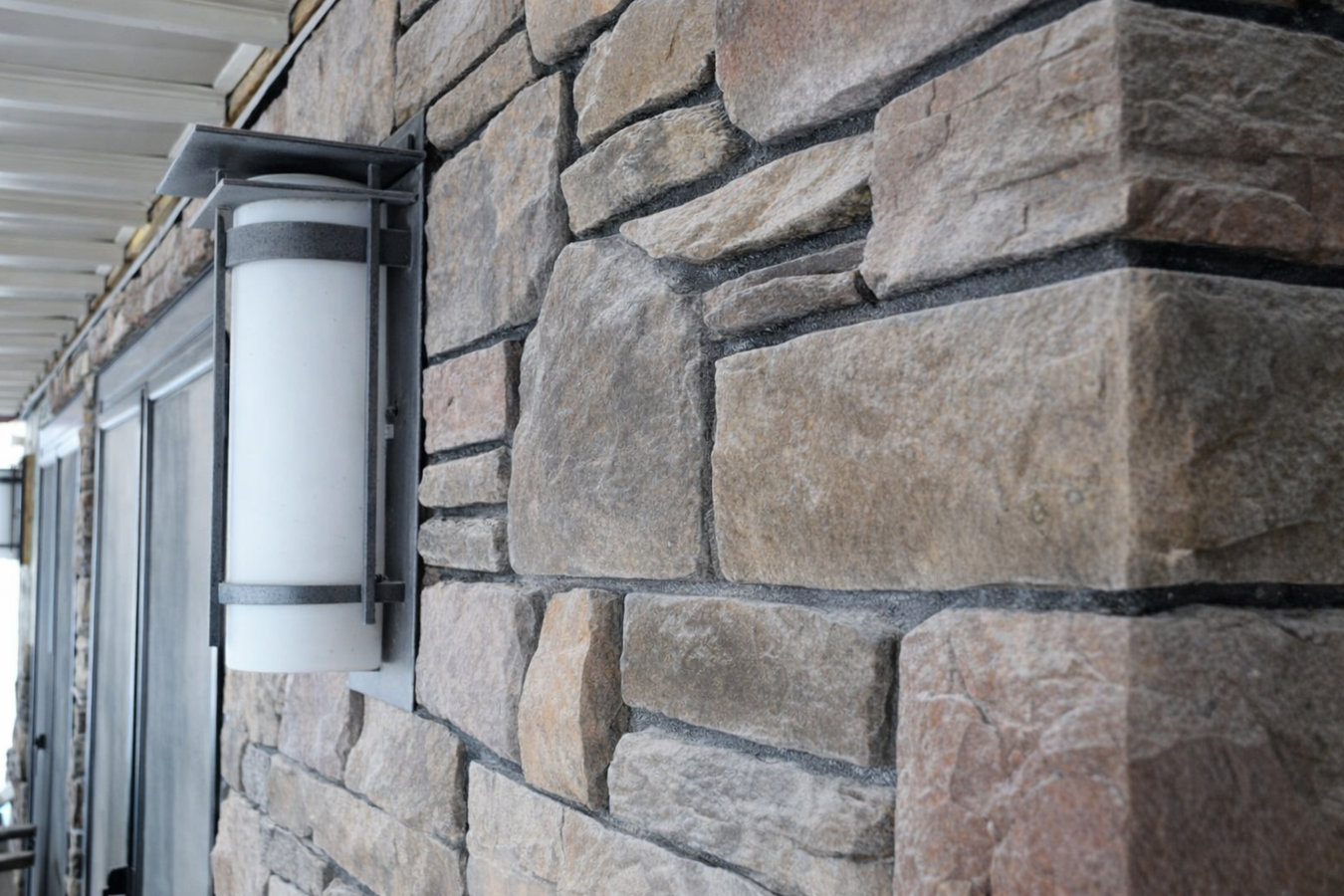
Stone veneer gives your home the look of full stone construction at a fraction of the cost - but only when it is installed with the right mortar and moisture barriers for Fayetteville winters. Done right, it lasts decades and never needs repainting.
Stone veneer installation in Fayetteville means applying a thin layer of real or manufactured stone - typically one to three inches thick - to an existing wall surface to give it the look of full stone construction. Because the veneer carries almost no structural load, most jobs can be completed in two to five days for a standard accent wall or fireplace surround.
For Fayetteville homeowners, stone veneer is one of the few exterior upgrades that changes how your home reads from the street without requiring a complete overhaul. It works on entry columns, lower facade panels, garage walls, and gable ends. Many homeowners combine an exterior veneer project with a fireplace installation or fireplace surround at the same time, since the same crew and materials work for both.
The most common reason stone veneer fails in this climate is water getting behind the stone face. A proper installation includes a moisture barrier on the wall substrate before any stone is set, plus correctly lapped flashing at every opening and the right mortar mix for Northwest Arkansas freeze-thaw cycles. The Natural Stone Institute maintains installation standards that guide how these details are handled correctly.
If the mortar between your stones looks powdery, is pulling away from the stone faces, or has gaps you can push your finger into, the joint is failing. In Fayetteville, freeze-thaw cycling accelerates this once it starts - moisture enters the crack, freezes, expands, and widens the gap with each cycle. Catching it at the mortar stage is a tuckpointing repair; waiting until stones detach is a full section replacement.
Press gently on a few stones after your veneer has been in place for a year or two. If any piece moves or sounds hollow when you knock on it, the bond between the stone and the wall substrate has broken. This happens when the original installation skipped the metal mesh layer or used the wrong mortar mix. Loose stones let water in behind the veneer, which is when damage to the wall framing or sheathing begins.
Water stains on interior walls near exterior veneer, paint that peels or bubbles at the base of an outside wall, or a musty smell after heavy Ozark spring rains all point to water getting through the exterior cladding. Northwest Arkansas gets significant spring rainfall, and walls that were not properly waterproofed at installation are vulnerable. The source is often failed flashing at a window or door, not the stone face itself.
If your home has original stucco with hairline cracks, wood siding you have repainted more than twice, or aging fiber cement that has started to show its age, stone veneer is worth considering as a long-term replacement. Unlike paint or wood, properly installed veneer does not need to be refreshed every few years. Homes built in Fayetteville in the 1960s and 1970s commonly reach this point, especially those in older neighborhoods near campus or downtown.
Every stone veneer installation we do starts with proper wall prep: cleaning the substrate, attaching the metal mesh layer where the wall assembly requires it, applying a base coat of mortar, and installing a moisture barrier before any stone is set. This prep work is what separates an installation that holds for 30 years from one that starts showing problems in year three. For projects involving a new fireplace or fireplace surround, fireplace installation can be combined with exterior or interior veneer work in one project scope.
For homes where the masonry underneath the veneer has deteriorated - older homes with cracked stucco, failing brick facing, or spalling block - we assess the substrate condition during the estimate visit and may recommend masonry restoration before any new stone is applied. Layering new veneer over a failing substrate is a short-term fix that leads to the same failure in a few years. We do the work in the right order.
Ideal for homeowners who want to upgrade a front entry, garage wall, lower facade, or gable end - the most impactful curb appeal improvement short of a full exterior replacement.
Stone veneer around a firebox or on an interior feature wall adds texture and warmth without the cost of a full stone wall - suits homeowners updating a main living area or finished basement.
Every piece is cut from natural rock, so no two walls look identical - the right choice for homeowners who want natural variation and are working with a budget that allows for higher material costs.
Cast concrete that closely mimics natural stone - lighter weight, wider range of consistent colors, and a lower cost per square foot than quarried stone. Well suited for larger surface areas and budget-conscious projects.
Fayetteville sits at about 1,400 feet elevation in the Ozark foothills, which makes it colder than most of Arkansas - temperatures dip below freezing regularly and can swing above and below that threshold multiple times in a single week during January and February. That repeated freeze-thaw movement is one of the main forces that causes mortar joints to crack over time. A mason who has not worked in this climate may use a mortar mix appropriate for a warmer, more stable region, and those joints will fail faster here than the same work would fail in a milder part of the state.
The clay-heavy soils common throughout Washington County also mean that walls, footings, and the structures stone is applied to can shift slightly with seasonal moisture changes. That movement transfers stress to the veneer bond, which is why confirming wall substrate stability before starting is a necessary step on any exterior project. We serve homeowners throughout the greater Fayetteville metro, including Bentonville and Cave Springs, where newer subdivisions built for curb appeal upgrades make stone veneer accent work one of the most requested masonry services in the area.
Many Fayetteville neighborhoods governed by homeowners associations require exterior material approval before installation begins. We are familiar with that process and can help you prepare the documentation your HOA needs before any work starts.
We ask a few basic questions - what area you want covered, whether you have a material preference, and whether you have noticed any existing moisture or wall issues. We respond within one business day and schedule a site visit. You do not need to have all the answers before you call.
We walk the wall with you, measure the area, and check the substrate condition and any moisture concerns. You receive a written, itemized estimate within a few days that breaks out materials and labor separately. No verbal ballparks, no prices that change once work starts.
Once you approve the estimate, we help you choose your stone style and color and confirm whether your HOA or the City of Fayetteville requires any approvals or permits for your specific project. Materials are ordered, and a start date is set - typically one to two weeks out depending on the season.
The crew preps the wall, sets each stone section by section, fills and finishes the joints, and removes any mortar smear from the stone faces before cleanup. After the work is done, we walk the finished project with you. The mortar takes about 28 days to reach full strength - your crew will walk you through what to avoid during that window before they leave.
Free written estimate, no obligation. We assess wall substrate condition and HOA requirements before any work begins.
(479) 485-4688The mortar mix that holds in a warm, stable climate is not necessarily the right mix for a region where temperatures cross the freezing point multiple times per week. We use mortar formulated for Fayetteville's freeze-thaw conditions - a specific decision that most generic contractors do not make. It is one of the main reasons our veneer installations look the same in year ten as they do on day one.
Water behind the veneer is how a beautiful installation turns into a wall framing repair. Every exterior stone veneer project we do includes a moisture barrier on the wall substrate and properly lapped flashing at every window, door, and trim transition. This step is sometimes skipped by contractors looking to lower a bid - we include it because skipping it is the most common reason stone veneer fails here.
A number of established Fayetteville neighborhoods have HOA design approval requirements for exterior material changes. We check this during the estimate visit and help you prepare any documentation needed before work begins - so you do not discover a compliance issue after installation is complete. For projects requiring a city permit, we handle the application and inspection coordination.
We hold an Arkansas contractor license through the Arkansas Contractors Licensing Board and carry general liability insurance. For work applied directly to the exterior of your home, verifying that your contractor is licensed and insured before signing a contract is a straightforward step that protects you if anything goes wrong.
Stone veneer done right adds lasting curb appeal and requires almost no maintenance over its life. Done wrong, it creates water damage inside a wall that is invisible until the cost of repair is far greater than the original installation. We do it right the first time.
Full-depth stone construction for walls, pillars, and structural features where solid stone - not veneer - is the right choice for the application.
Learn MoreWhen you need a structural masonry wall rather than a decorative surface, concrete block provides the load-bearing capacity and durability that veneer cannot.
Learn MoreSpring and fall booking windows fill quickly. Contact us now and we will schedule a site visit, assess your wall, and give you a written estimate with no obligation.