Loading...
Serving Fayetteville, AR and surrounding areas. (479) 485-4688
Custom Fayetteville Masonry & Concrete handles stone veneer installation, retaining walls, brick repair, and concrete work throughout Cave Springs, AR. We understand the sloped Ozark Plateau terrain and the clay soil conditions that affect masonry on Cave Springs properties, and we respond to all inquiries within one business day.
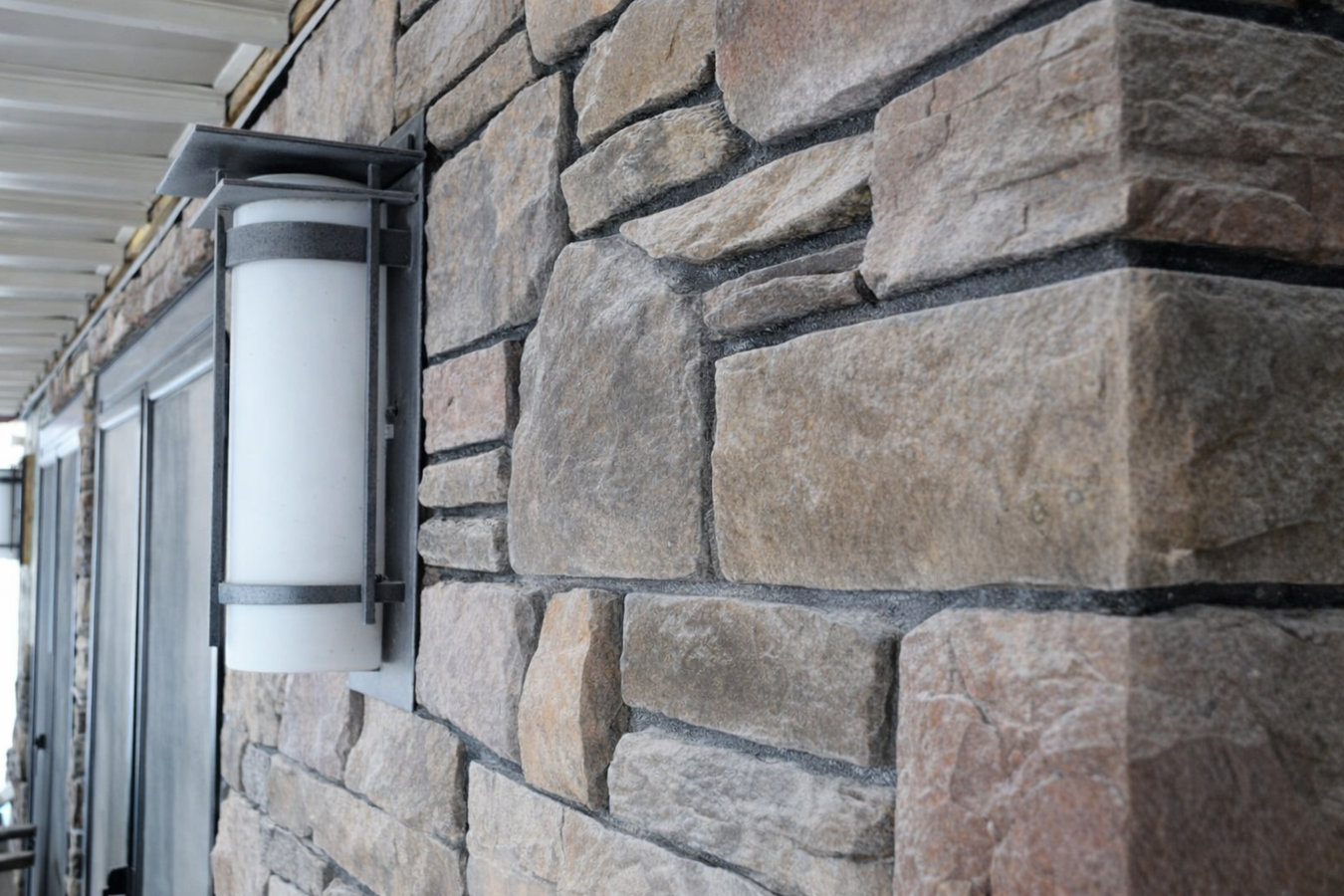
Cave Springs sits on the edge of the Ozark Plateau, and a lot of homeowners here want exterior stone that fits the landscape rather than looking out of place against the wooded, hilly surroundings. Our stone veneer installation service covers front facades, accent walls, and exterior features using materials that hold up to northwest Arkansas winters and look right on this terrain.
Sloped lots are common throughout Cave Springs, and the clay soil on Ozark Plateau terrain holds water in ways that flat-city properties do not. A properly built retaining wall with drainage aggregate behind it controls runoff, holds back shifting soil, and turns an eroding hillside into a usable, level yard space.
The majority of Cave Springs subdivision homes built in the 2000s and 2010s use brick veneer on the front facade, and those veneers are now showing cracked mortar joints and spalled faces after years of northwest Arkansas freeze-thaw cycles. We repair and repoint to match the existing work so the fix is watertight and blends with the original brick.
Concrete driveways on sloped Cave Springs lots face both freeze-thaw cracking and soil movement from clay that swells and contracts with every rain cycle. Paver installations adapt better to that ground movement than a solid slab, and damaged sections can be replaced without tearing out the entire driveway.
Freeze-thaw cycles between December and February hollow out mortar joints on brick walls and chimney stacks throughout Benton County. Fresh tuckpointing seals those joints before water migrates behind the brick, preventing the kind of moisture damage inside wall cavities that does not show up until it has already spread well beyond the surface.
Cave Springs lots with real slope and clay soil are prone to uneven settling, particularly in homes where original grading did not direct water away from the foundation. Rocky subsoil close to the surface also complicates pier work and requires a contractor who has actually worked on Ozark Plateau terrain before.
Cave Springs has grown from about 1,300 residents in 2010 to over 6,000 today, and that growth came in fast through subdivision development on hilly Ozark Plateau terrain. Most homes here were built between 2000 and the present, which means builder-grade concrete and brick veneer that was installed quickly during a construction boom is now reaching the age where it needs real attention. Driveways, garage aprons, and sidewalks poured over improperly compacted clay fill crack in predictable patterns. Brick veneer mortar joints that were never detailed for slope-related movement open up after repeated wet and dry cycles.
The Ozark Plateau terrain changes what masonry work looks like here compared to flatter parts of northwest Arkansas. Lots with significant grade mean that water from spring storms and snowmelt does not just sit - it flows, and if grading and drainage were not done correctly when the home was built, that water ends up at the foundation. The clay-heavy soil of Benton County swells when it absorbs that runoff and contracts again when it dries out. That cycle pushes against retaining walls from behind, heaves concrete slabs from below, and puts lateral pressure on foundation walls. A contractor who understands both the terrain and the soil handles these conditions very differently from one who works only on flat residential sites.
Our crew works throughout Cave Springs regularly, and we understand the local conditions that affect masonry work here. Structural masonry jobs requiring permits go through the City of Cave Springs Building Department, and we handle the permit process on jobs that require it so you do not need to navigate the building department on your own.
Cave Springs is a city with a distinct identity - it takes its name from the natural cave and spring on the west side of town, a landmark most long-time residents know well. The neighborhoods stretch out from the old city center, with newer subdivisions along Wagon Wheel Road and surrounding streets that were platted during the fast-growth years of the 2010s. The terrain varies: some lots are relatively flat, but many have the slope and tree cover typical of Ozark Plateau development, where rocky soil sits close to the surface and drainage must be planned rather than assumed.
We regularly serve Centerton just to the south, and we know the differences between the two cities - Cave Springs lots tend to have more variation in grade and soil depth, while Centerton's terrain is somewhat flatter and more consistent. That local knowledge shapes how we approach foundation, retaining wall, and flatwork jobs on each side of the line.
We respond to all new inquiries within one business day. You do not need measurements or detailed specs ready - we gather everything during the site visit.
We visit to review the full scope of work and look for underlying factors - slope, drainage, soil condition, or related damage - that affect the repair. You receive a written estimate before any commitment is required, with cost factors explained clearly.
Once you approve the estimate, we schedule the job and outline what happens each day. Most Cave Springs residential jobs run two to six days depending on scope. We pull required permits and coordinate inspections.
We walk the finished work with you before we leave and answer any questions you have. All debris and leftover material is removed from the property on the final day.
We serve all of Cave Springs, AR - from the subdivisions off Wagon Wheel Road to the older streets near the city center. Free estimates, no commitment.
(479) 485-4688Cave Springs is a growing city in Benton County in northwest Arkansas, positioned on the edge of the Ozark Plateau, where the land is hilly, wooded, and notably different from the flatter terrain of the broader Fayetteville-Springdale-Rogers metro. The city takes its name from a natural cave and spring on the west side of town, and residents have a strong sense of local identity rooted in that landscape. Most housing is single-family owner-occupied homes built after 2000, with brick veneer fronts and vinyl or fiber cement siding on the sides, standard attached garages, and concrete driveways. Sloped and wooded lots are common, and rocky soil close to the surface is a regular feature of local construction.
The city is part of one of the fastest-growing metro areas in the country, and Cave Springs itself has expanded quickly in recent years. Many residents work in Bentonville or Rogers, with Walmart's headquarters campus just a short drive east. Cave Springs City Park is a central gathering spot for local families. Neighboring Rogers sits to the south and east, and we regularly work across both cities. The combination of sloped terrain, clay soil, and a housing stock that is now aging into its first major maintenance window makes Cave Springs one of the most active markets in Benton County for masonry and concrete repair.
Restore structural integrity and stop foundation damage from spreading further.
Learn MoreControl erosion and reshape your landscape with a solid retaining wall.
Learn MoreBring aging brick and stone back to their original condition and appeal.
Learn MoreRefresh any surface with beautiful, low-maintenance stone veneer.
Learn MoreInstall a solid block wall foundation that supports your structure reliably.
Learn MoreCreate the ultimate outdoor cooking space with custom masonry craftsmanship.
Learn MoreConnect your outdoor spaces with a beautifully crafted masonry walkway.
Learn MoreDefine property lines and add curb appeal with expert brick wall installation.
Learn MoreSloped lots, clay soil, and aging builder-grade concrete are a combination we know well in Cave Springs - call or submit a request today and we will respond within one business day.